Buying a new car is exciting, but keeping it looking new is not always easy. Daily traffic, narrow parking spaces, road dust, construction debris and changing weather conditions can gradually affect your car’s exterior. Even regular washing may not be enough to maintain its original finish.
This is why many car owners in Bangalore consider Paint Protection Film (PPF) and Ceramic Coating. Both are popular car paint protection solutions, but they work differently and offer different benefits.
If you are planning to protect your vehicle, understanding the difference between PPF and Ceramic Coating can help you make a better decision. So, which one is actually worth investing in? Let’s compare both options.
What Is Paint Protection Film (PPF)?
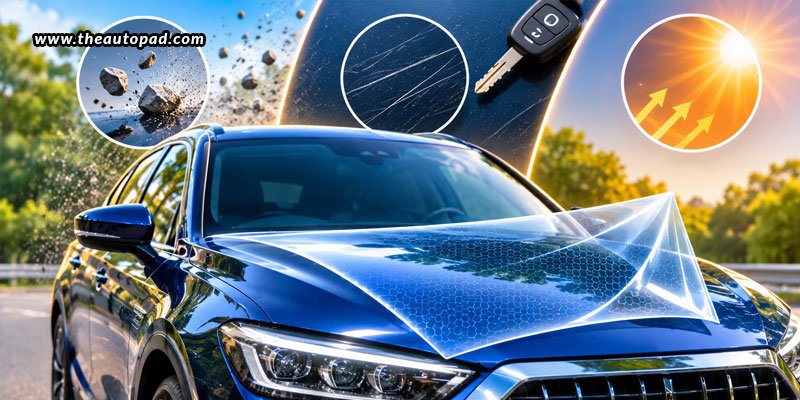
Paint Protection Film, commonly known as PPF, is a transparent polyurethane film applied to the painted surfaces of a car. It creates a physical protective barrier between the original paint and external elements.
One of the biggest advantages of PPF is its ability to protect against minor scratches, stone chips and everyday surface damage.
For example, when small stones hit your car while driving on a highway, the film absorbs much of the impact and helps prevent damage to the paint underneath.
Modern PPF products may also include self-healing technology. This feature allows certain light scratches and swirl marks on the film to disappear when exposed to heat, depending on the product.
PPF is commonly installed on the bonnet, front bumper, side mirrors, door edges and other areas that are more exposed to road debris. It can also be applied to the entire vehicle.
What Is Ceramic Coating?
Ceramic Coating is a liquid protective product applied to a vehicle’s exterior. Once properly applied and cured, it forms a protective layer that bonds with the paint or compatible surface.
Unlike PPF, ceramic coating does not provide a physical film over the paint. Its main purpose is to improve surface protection, enhance gloss and make regular cleaning easier.
One of its most noticeable features is hydrophobic behaviour. Water tends to form droplets and roll off the coated surface, taking some loose dirt with it.
Ceramic coating can also help reduce the attachment of common contaminants, making vehicle maintenance more convenient.
However, it is important to understand that ceramic coating cannot prevent stone chips or protect against deeper scratches. It is primarily designed for surface-level protection rather than impact resistance.
PPF vs Ceramic Coating: Key Differences
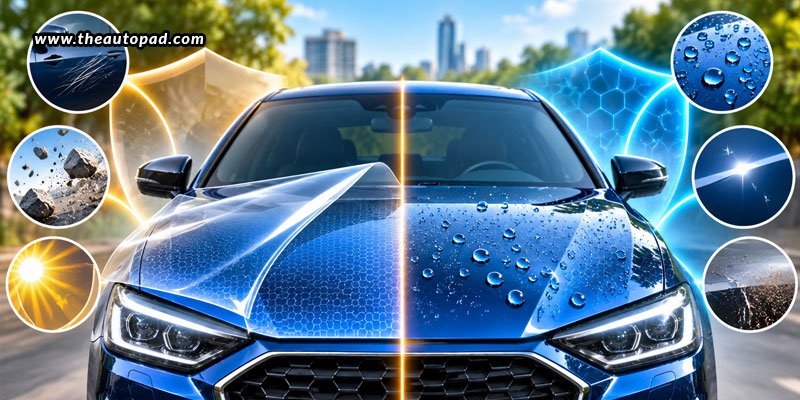
Although both options help maintain your car’s exterior, their performance and purpose are quite different.
| Comparison | Paint Protection Film | Ceramic Coating |
| Protection Type | Physical film barrier | Liquid-applied coating |
| Scratch Protection | Helps resist minor scratches | Limited resistance to light surface marks |
| Stone Chip Protection | Yes, against many minor impacts | No meaningful impact protection |
| UV Protection | Depends on film specifications | Depends on coating formulation |
| Gloss Enhancement | Available in gloss finishes | Enhances paint gloss |
| Water Repellency | Depends on film properties | Strong hydrophobic properties |
| Maintenance | Regular cleaning required | Regular cleaning required |
| Cost | Generally more expensive | Generally more affordable |
The right choice depends on what you expect from your car’s paint protection.
1. Which Offers Better Protection Against Scratches?
Bangalore’s busy roads and crowded parking areas can expose your car to minor scratches. Contact with bushes, bags, keys and accidental rubbing can leave visible marks on the paint.
PPF is the better option if scratch protection is your main priority. Its polyurethane construction creates a physical barrier that helps absorb minor surface damage before it reaches the original paint.
Some premium PPF products also have self-healing properties that help reduce the appearance of light scratches.
Ceramic coating, on the other hand, can provide limited resistance to light surface marks, but it is not designed to prevent scratches caused by physical contact.
Winner: PPF
2. Which Is Better for Stone Chips and Road Debris?
Stone chips are a common concern for people who regularly drive on highways or travel behind trucks and other heavy vehicles.
Small stones and road particles can hit the front bumper, bonnet and side mirrors, sometimes leaving permanent marks on the paint.
PPF offers considerably better protection in these situations because its thickness and flexible structure help absorb the impact of small flying particles.
Ceramic coating cannot provide the same protection because it does not create a physical cushioning layer.
Winner: PPF
3. Which Gives Your Car a Better Shine?
If maintaining a glossy, well-finished appearance is your main concern, ceramic coating is an attractive option.
It enhances the appearance of the paint by adding depth and gloss. It also gives the surface a smooth feel, making the car look freshly detailed.
Gloss-finish PPF can also maintain the original appearance of your vehicle while providing physical protection. Matte PPF is available for car owners who prefer a different finish.
Both options can improve the overall appearance of a vehicle, but ceramic coating is particularly popular among owners who prioritise gloss and easy maintenance.
Winner: Ceramic Coating
4. Which Is Easier to Maintain?
No matter which protection option you choose, regular car washing is still important.
Ceramic coating makes cleaning easier because water and loose dirt are less likely to stick firmly to the surface. This can reduce the effort required during routine washing.
PPF also comes with relatively easy maintenance, particularly when the film has hydrophobic properties. However, it requires proper care around film edges and should be cleaned according to the manufacturer’s recommendations.
Neither option makes your car completely maintenance-free.
Winner: Ceramic Coating for easier routine cleaning
5. Which Is More Suitable for Bangalore’s Weather?
Bangalore experiences a mix of sunny days, monsoon showers, dust and changing road conditions. Vehicles parked outdoors may also experience prolonged exposure to sunlight and environmental contaminants.
Both PPF and ceramic coating can help protect your vehicle, but they serve different purposes.
Quality PPF with UV-resistant properties helps protect the original paint from certain forms of environmental damage and minor physical impacts.
Ceramic coating helps improve water repellency and makes it easier to remove dust and common contaminants. It can also offer some protection against environmental exposure, depending on its formulation.
If your vehicle regularly faces road debris and parking-related scratches, PPF is generally the more comprehensive choice. If your main concern is gloss and easier cleaning, ceramic coating is worth considering.
Can You Apply PPF and Ceramic Coating Together?
Yes. In fact, some car owners choose to combine both solutions to get the benefits of each.
PPF is applied first to protect the paint against physical damage. A compatible ceramic coating can then be applied over the film to improve its surface properties, gloss and water repellency.
However, compatibility depends on the specific PPF and ceramic coating products. It is important